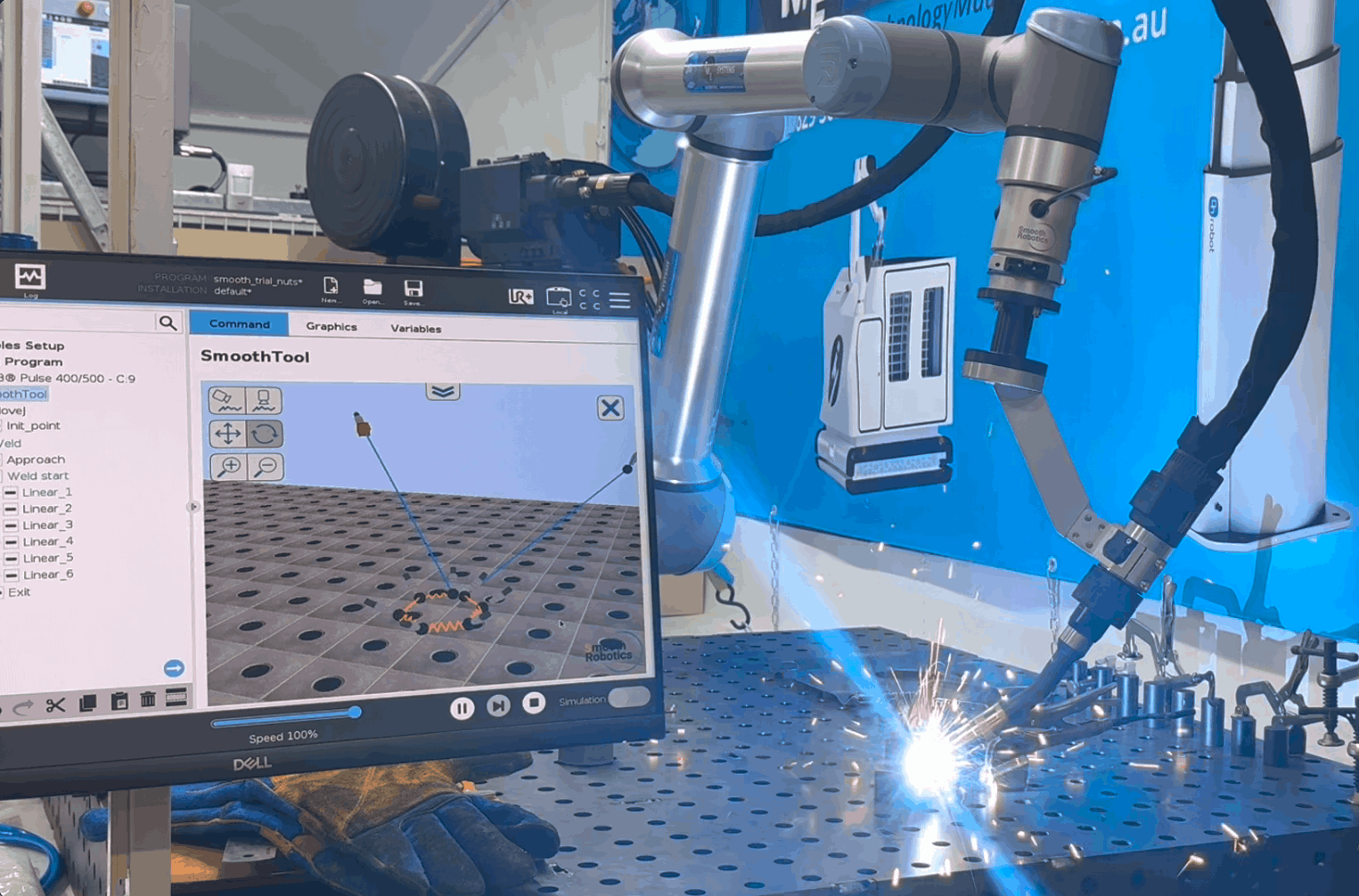
Robot Welding advice for Australian workshops
This robot-welding.au site is focused on metal fabrication teams planning a practical robotic welding project. The content here is written around automation planning, process fit, and staged adoption from demo to production, so the advice, page titles, and internal links are deliberately different from the other TME Systems welding domains.
Automation planning focus
This page supports the robot-welding.au theme: staged robotic welding adoption, process-fit checks, candidate-part selection, risk reduction, and planning from demonstration through production use.
Consistent arc welding
Robotic arc welding is most useful when a team needs repeatable torch angle, travel speed, stick-out, and path control across a run of similar parts. That consistency can help reduce rework and make production output easier to plan.
Useful for skilled teams, not instead of them
A robot does not replace welding knowledge. The best installations use the welder's understanding of materials, heat input, joint preparation, and quality expectations, then make the repeatable motion easier to reproduce.
Flexible cells for changing work
Collaborative robots are often considered when traditional automation is too rigid for high-mix work. The right cell can be retaught, moved between suitable parts, and adjusted as production priorities change.
Talk to TME Systems
Tell us about your parts, welding process, production volumes, and team goals. We can help you decide whether a collaborative welding system is a practical fit.
Get Started